Brief: Join us for a close-up look at this solution and see it in action. In this video, you'll discover how the AI Embryo Analysis Time Lapse System uses advanced time-lapse imaging to continuously monitor embryo development. We'll walk you through its unique environmental control and independent chamber design, showing how it provides a stable, hassle-free culture environment for reliable embryo screening.
Related Product Features:
Features ten independent cultivation chambers for simultaneous culture of multiple patient embryos.
Utilizes time-lapse imaging to capture key stages of embryonic development for continuous monitoring.
Provides a strong basis for embryo screening through full-time AI analysis and evaluation.
Includes a unique environmental control system ensuring a stable, hassle-free culture environment.
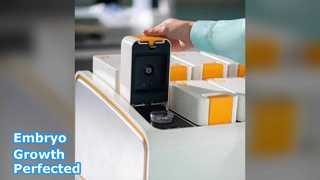
Offers simple and safe operation with a one-handed opening design for easy dish placement and removal.
Monitors temperature and air pressure in real-time for each chamber to ensure environmental stability.
Equipped with various alarm systems for real-time status display, remote alerts, and data recording.
Supports culture of up to 10 patients at once, with a maximum of 23 embryos per single dish.
FAQs:
How many patients can the Time-Lapse System culture simultaneously?
The system can culture embryos for up to 10 patients at one time, with each patient's embryos housed in an independent chamber.
What imaging technology does the system use for embryo monitoring?
It employs time-lapse imaging techniques to continuously capture key developmental stages, providing comprehensive data for AI-assisted embryo analysis.
How does the system ensure a stable culture environment?
It features a unique environmental control system with real-time monitoring of temperature and air pressure for each chamber, along with multiple alarm systems to maintain optimal conditions.
What is the maximum number of embryos supported per dish?
A single dish can support a maximum of 23 embryos, allowing for efficient high-capacity culture within the system.